

Vanilla production in Madagascar is a long and demanding process that takes about 2 to 3 years before the first harvest, followed by an additional 5 to 6 months for curing the beans. The exceptional quality of Madagascar Bourbon vanilla relies on the producers' expertise at every stage.
1. Land Selection and Planting
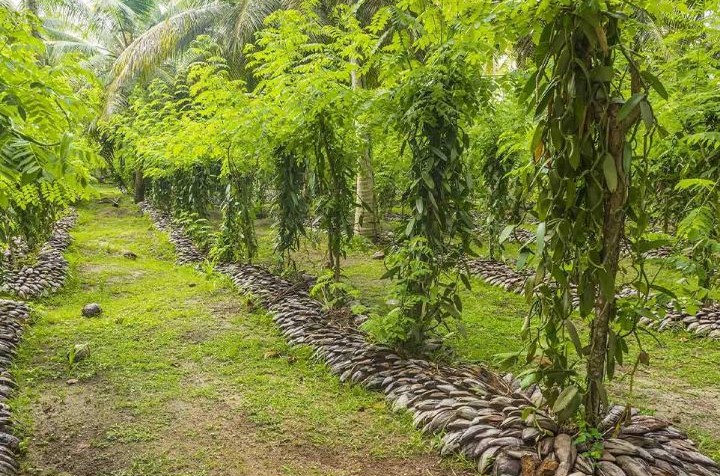
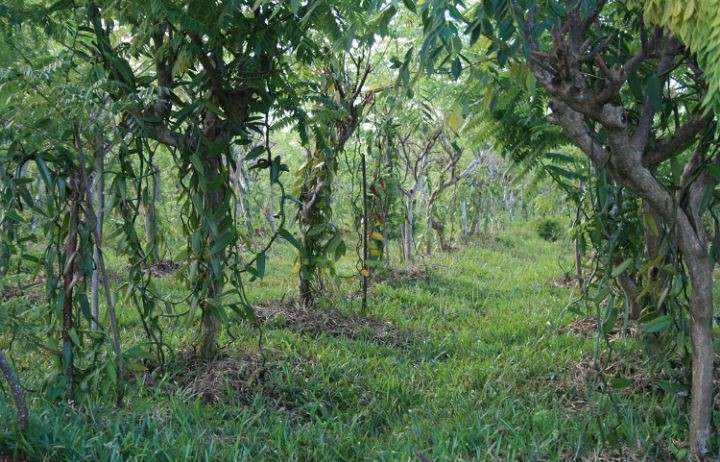
- Selection of rich, well-drained, and slightly shaded soil.
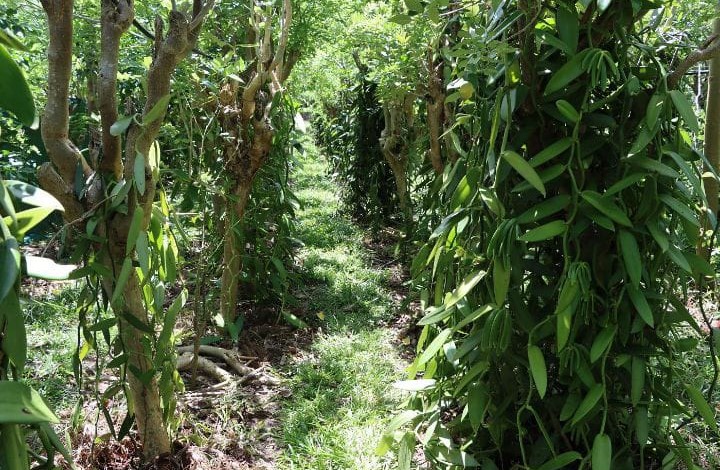
- Installation of living (Gliricidia, Jatropha, etc.) or artificial supports.
- Planting of vanilla cuttings (Vanilla planifolia) measuring 80-120 cm.
- Cuttings are planted at the beginning of the rainy season.
2. Plantation Maintenance
- Regular weeding.
- Pruning of supports and vines.
- Mulching to retain moisture.
- Protection against diseases and pests.
- Shade control to promote growth.
3. Flowering and Pollination
In Madagascar, there is no natural pollinating bee for vanilla. Each flower is therefore pollinated manually, one by one, using a thin bamboo stick or thorn. This operation must be carried out in the morning, on the same day the flower opens.
4. Pod Development
After successful pollination:
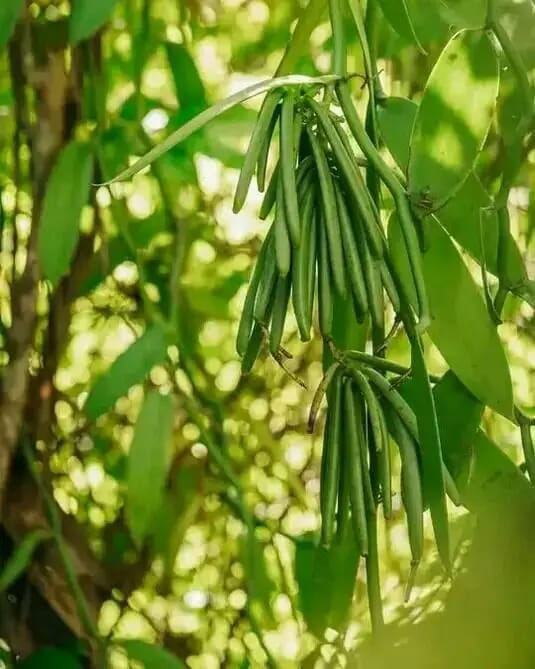
- Pods develop for 8 to 9 months.
- Producers monitor growth and remove defective pods.
5. Harvest
Harvesting takes place when the pods reach maturity, generally between June and September, depending on the region. Pods are hand-picked carefully to avoid damage.
6. Processing (Preparation or “Curing”)
This stage gives vanilla its characteristic aroma.
a. Scalding
Green pods are immersed for a few minutes in hot water (around 63 to 65°C) to stop growth and trigger enzymatic reactions.
b. Sweating (Fermentation)
Pods are wrapped in blankets and placed in boxes for several days to encourage fermentation.
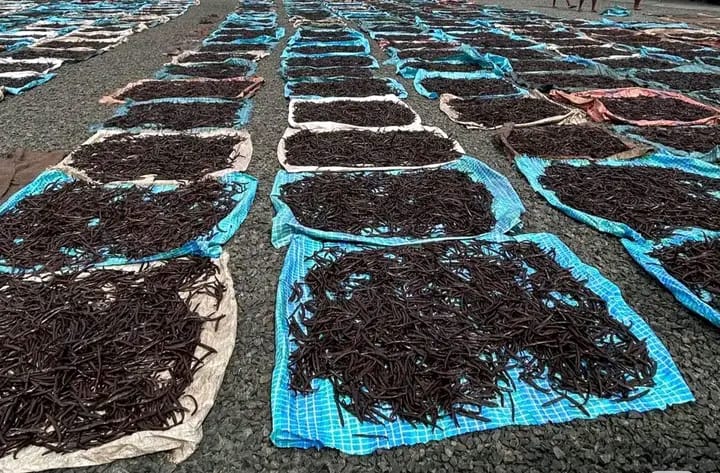
c. Drying
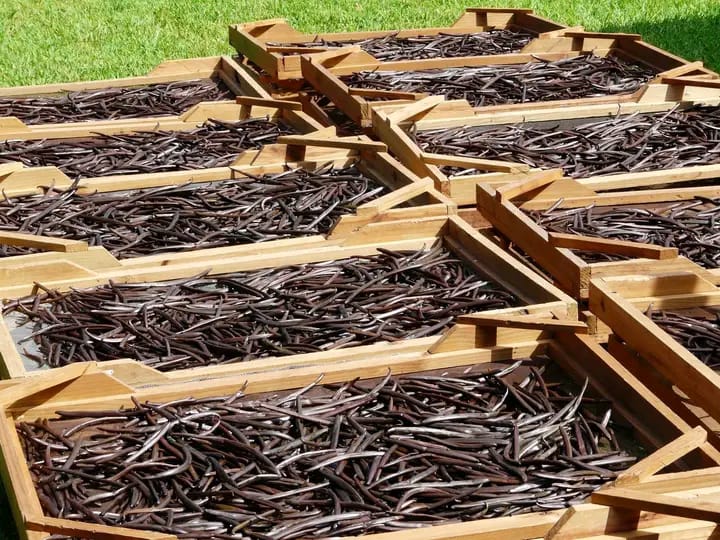
Drying alternates between:
- Sun exposure for a few hours;
- Resting in the shade.
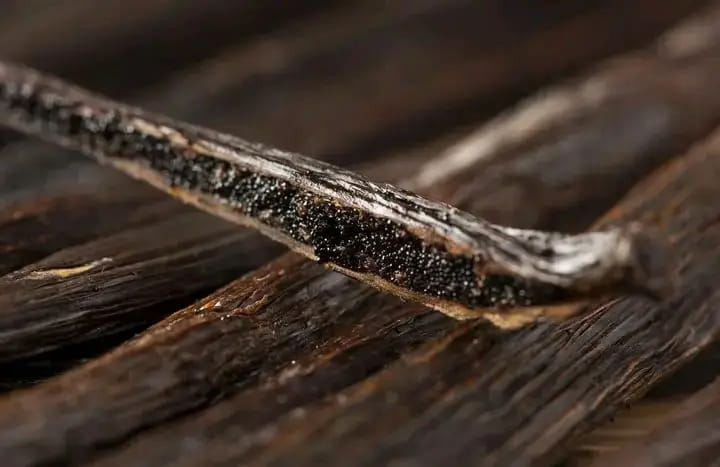
This step lasts several weeks until the pods reach 30-35% humidity.
d. Refining (Conditioning)
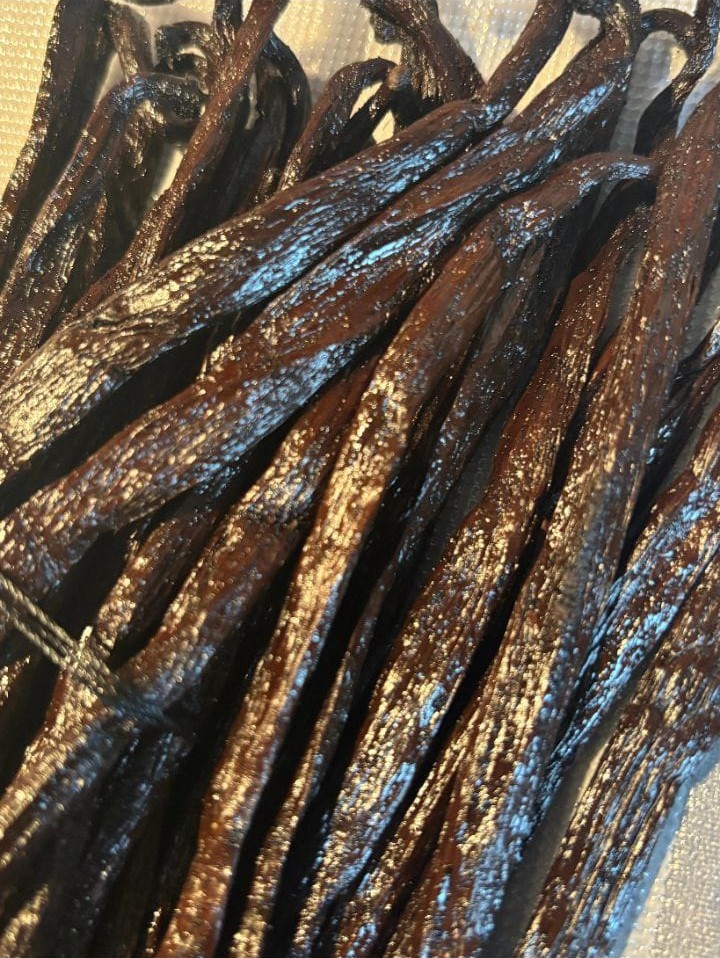
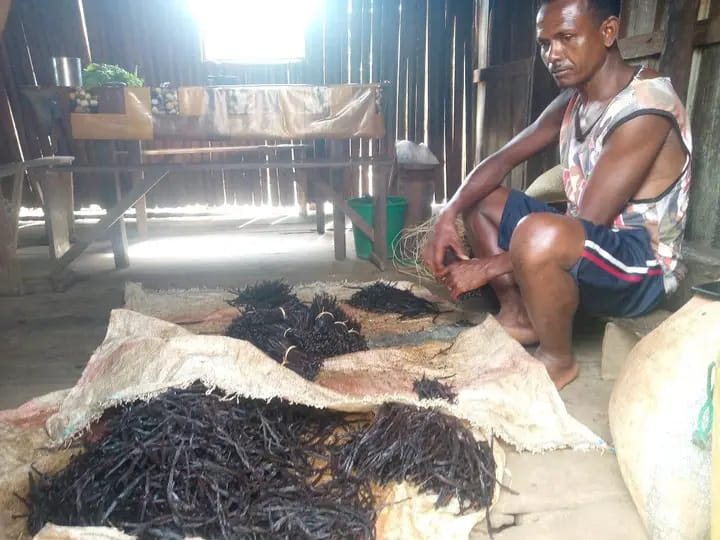
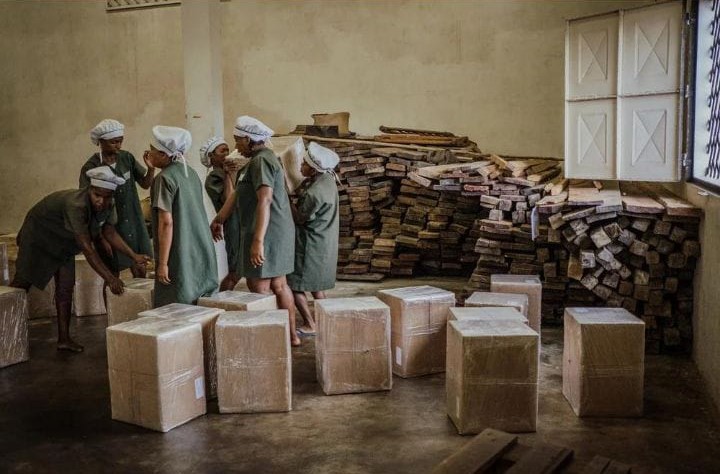
Pods are stored in closed trunks or boxes for 2 to 3 months or even more, during which their aroma continues to develop.
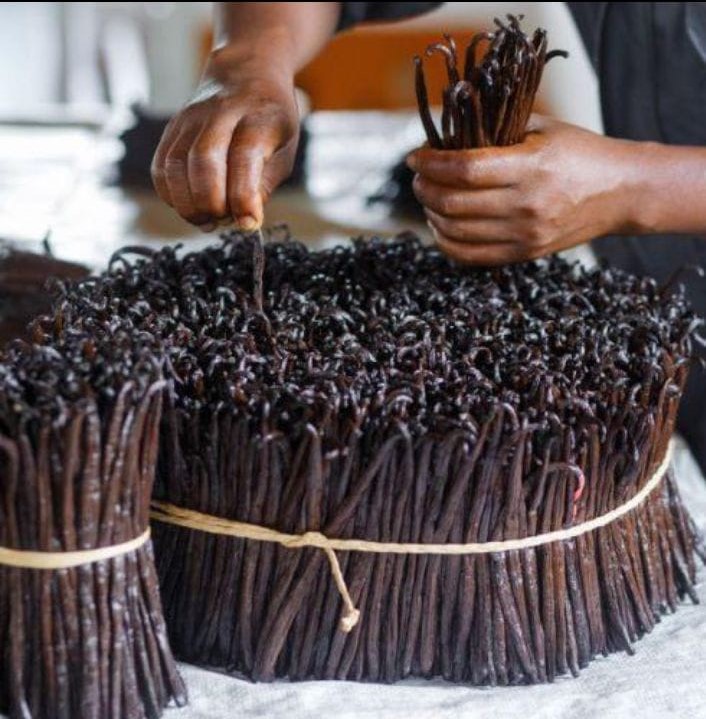
7. Sorting and Grading
Pods are sorted according to:
- Length
- Color
- Flexibility
- Moisture content
- Possible defects
They are then classified into categories such as Gourmet, TK Black, TK Red, etc.
8. Packaging and Export
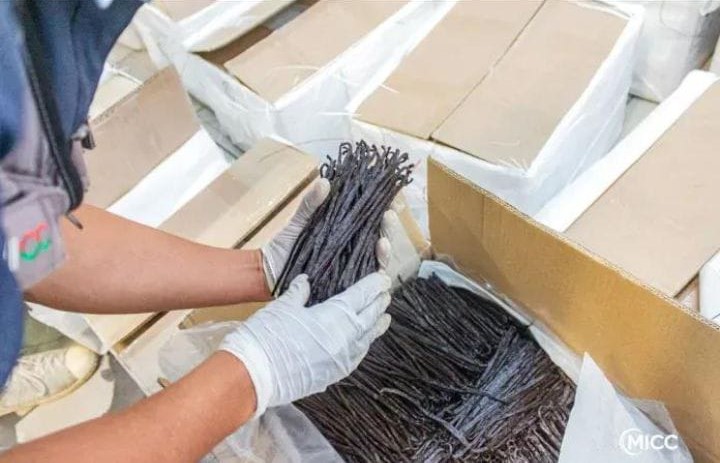
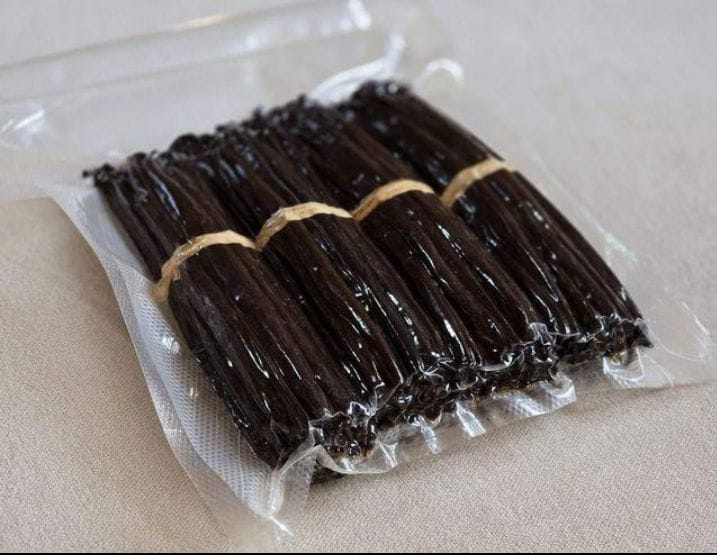
Pods are:
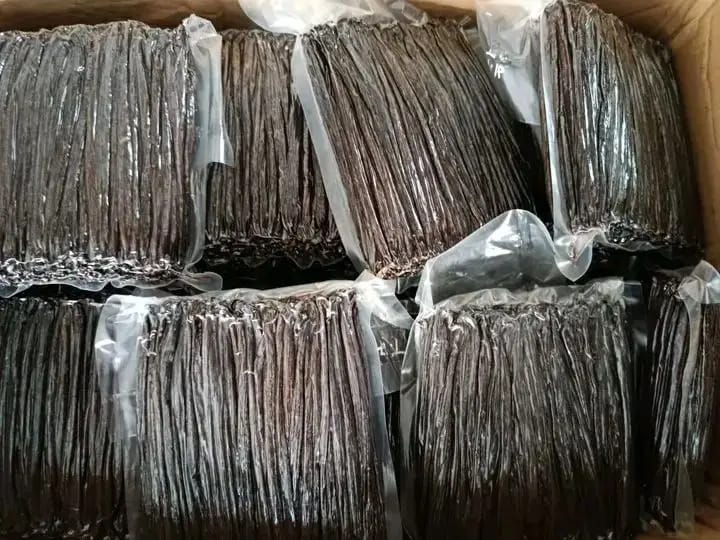
- Bundled or vacuum-packed;
- Packed in boxes suitable for export;
- Accompanied by necessary documents (phytosanitary certificate, certificate of origin, etc.) before shipment.